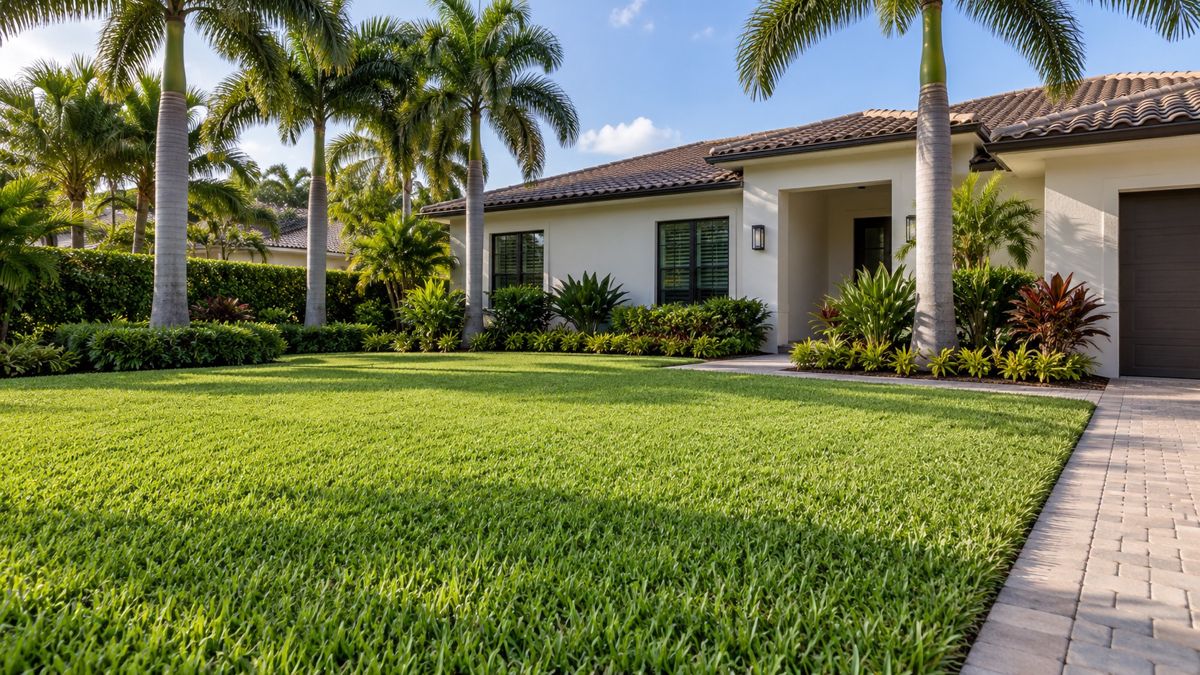
For most Miami lawns in full sun to light shade, St. Augustine is the safe choice. It handles heat, humidity and sandy soil, and it knits into a thick lawn. Zoysia suits owners who want a finer, denser look and will accept a little more care. Bahia is a budget option for large, sunny areas, and seashore paspalum is worth a look right on salt water. The right pick depends on sun, salt, soil, pets and how much mowing you want to do.
This guide walks through each grass, how Miami limestone soil and salt air affect the choice, and how to get new sod through its first months.
Which grass types grow well in Miami?
South Florida is warm-season grass country. Cool-season lawn grasses, such as the fescue and ryegrass blends sold up north, do not hold up through a Miami summer. The main contenders are:
- St. Augustine (varieties such as Floratam, Palmetto and Seville): broad blades, spreads fast, handles heat and some shade depending on variety.
- Zoysia (such as Empire and Zeon): fine to medium blades, dense, softer underfoot, slower to establish.
- Bahia: coarse and tough, tolerates poor soil and dry spells, often used on large lots and roadsides.
- Bermuda: fine texture and fast recovery, but it needs full sun and frequent mowing.
- Seashore paspalum: notable salt tolerance, used on coastal sites and golf courses, and it needs more inputs.
Varieties and availability change from season to season, so ask the sod supplier what is in stock and what they recommend for your site.
Is St. Augustine the right choice for most Miami yards?
St. Augustine is the most common home lawn grass in South Florida for good reason. It copes with heat, humidity and the sandy soil layer that sits over Miami limestone. It spreads by runners, so small gaps fill in over time. Floratam is known for sun and heat tolerance, while Seville and Palmetto are often chosen where there is more shade.
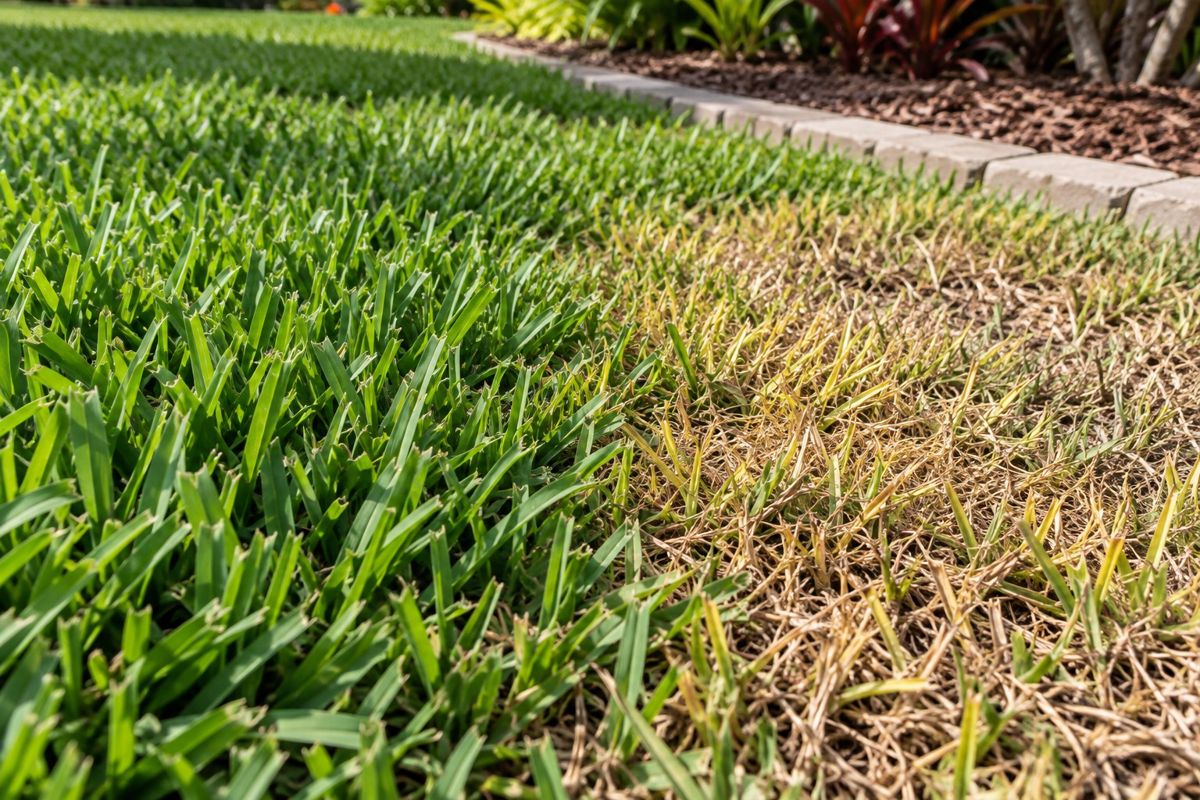
It has weak spots. St. Augustine is the favorite food of chinch bugs, which show up as yellow, dry patches in hot, sunny areas. It can also suffer from fungal problems when it stays wet for long stretches, and it does not like heavy foot traffic. Shade from mature mango, oak or ficus trees thins out most varieties, so deep shade is a poor place for any lawn.
If your yard is mostly open sun, with normal family and pet use, St. Augustine is where most people start.
Where does Zoysia make sense?
Zoysia gives a tighter, carpet-like finish and handles moderate traffic well. It tolerates some shade, and many homeowners like how it feels underfoot. It grows more slowly than St. Augustine, which means less mowing but also slower recovery after damage and a longer wait for a new lawn to fill in. Sod often costs more per pallet, and it benefits from a firm, level soil surface before it is laid.
Zoysia fits front lawns where looks matter, smaller yards and owners who do not mind regular care. It is less forgiving of skipped feeding or poor drainage. In a large back yard that takes a lot of play, the added cost may not be worth it.
Whichever grass you choose, avoid mixing varieties in the same patch. Different grasses look and grow differently, and the seams show.
How do salt air, shade and limestone soil change the choice?
Salt is the biggest factor on waterfront and near-ocean lots. Salt spray and salty irrigation water burn most turf. St. Augustine has fair salt tolerance, seashore paspalum has much more, and Bahia is on the weaker side. If your lot sits right on the bay or a canal, ask your supplier about salt tolerance before you buy.
Soil is the next factor. Miami soil is usually shallow, sandy and alkaline over limestone. High pH can lock up iron and other micronutrients, so grass turns pale yellow even when it is watered well. A soil test and a micronutrient feeding plan help more than extra water. Adding a layer of topsoil or compost before sodding gives the roots something to hold on to.
Finally, look at shade. Count the hours of direct sun in summer, not just winter. Less than about four hours is a warning sign for most grasses, and groundcover or mulch beds may be a better answer under big trees.
How do you choose good sod and prepare the ground?
Good sod is green, damp, cut evenly and stacked fresh. It should not be yellow, dried out at the edges or hot in the middle of the pallet. Sod that sits on a truck in the sun for a day starts life stressed. Ask when it was cut, and schedule the installation for the day it arrives.
Ground preparation decides how fast the roots take hold. A typical sequence looks like this:
- Remove old turf, weeds and debris, including rock and construction leftovers.
- Regrade so water runs away from the house and does not pool.
- Loosen the top layer and mix in topsoil or compost where the soil is thin.
- Check that the sprinkler heads work and cover the new area.
- Lay the sod in staggered rows, tight at the seams, and roll or press it to remove air gaps.
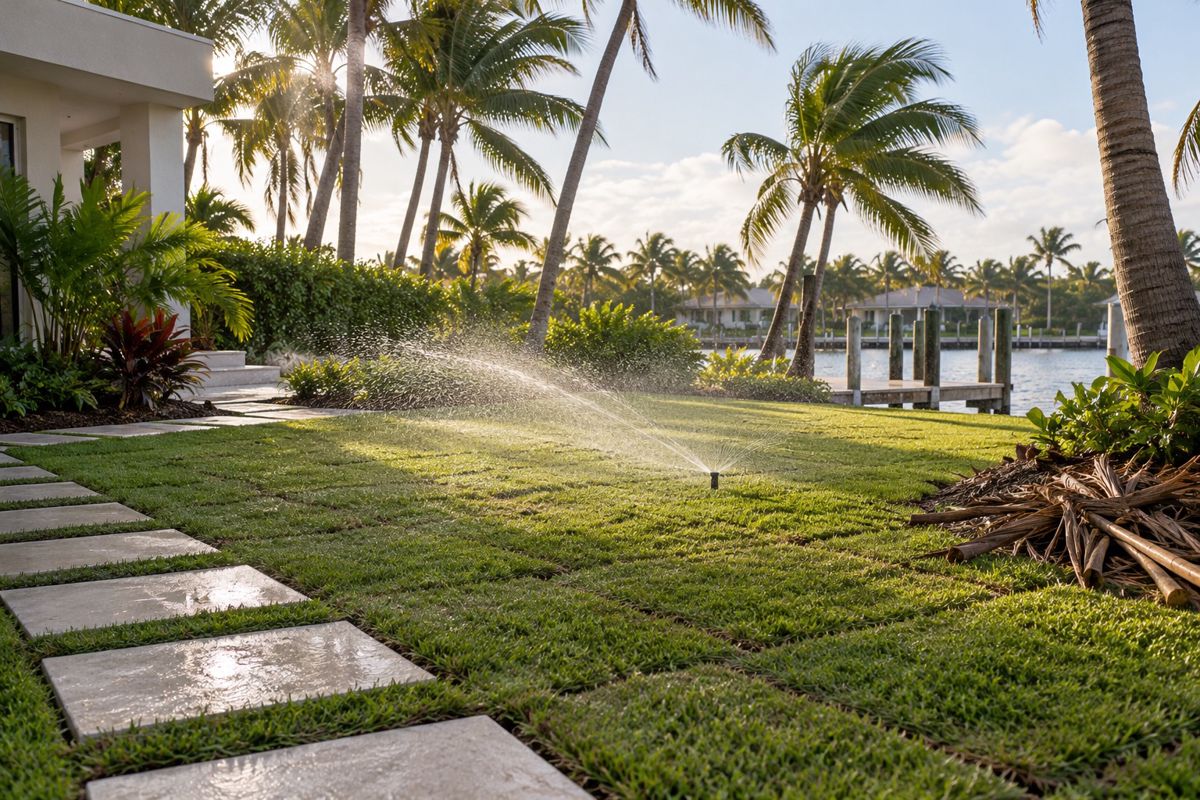
A working irrigation system matters at this stage, because new sod dries out fast on Miami limestone.
How do you care for new sod through rain, dry spells and hurricane season?
New sod needs steady moisture while the roots knit into the soil. Growers usually advise frequent light watering in the first couple of weeks, then less often and deeper as the lawn firms up. Florida water districts generally allow extra watering for new plantings for a limited period, but the rules change, so check the current schedule for your address with your utility or the South Florida Water Management District.
Hold off on the first mow until the sod is rooted and does not lift when you tug a corner. Keep St. Augustine on the taller side, since cutting it too short invites weeds and stress. Feed according to local fertilizer rules, which in Miami-Dade include limits during the summer rainy season.
Hurricane season runs from June 1 to November 30. Heavy rain and standing salt water can damage turf after a storm. Rinse salt off with fresh water if you can, clear fallen fronds and debris quickly so grass is not smothered, and give the lawn a few weeks before judging what survived.
Ready to lay new sod in Miami?
The right lawn comes down to sun, salt, soil and how you use the yard. If you are replacing a tired lawn or starting fresh, a site visit sorts out the grass type and the prep work in one go. See our sod installation service in Miami to get started, or read about landscape design if the whole yard needs a plan.