
Skip to content
  • Free written quotes
  • Local crews
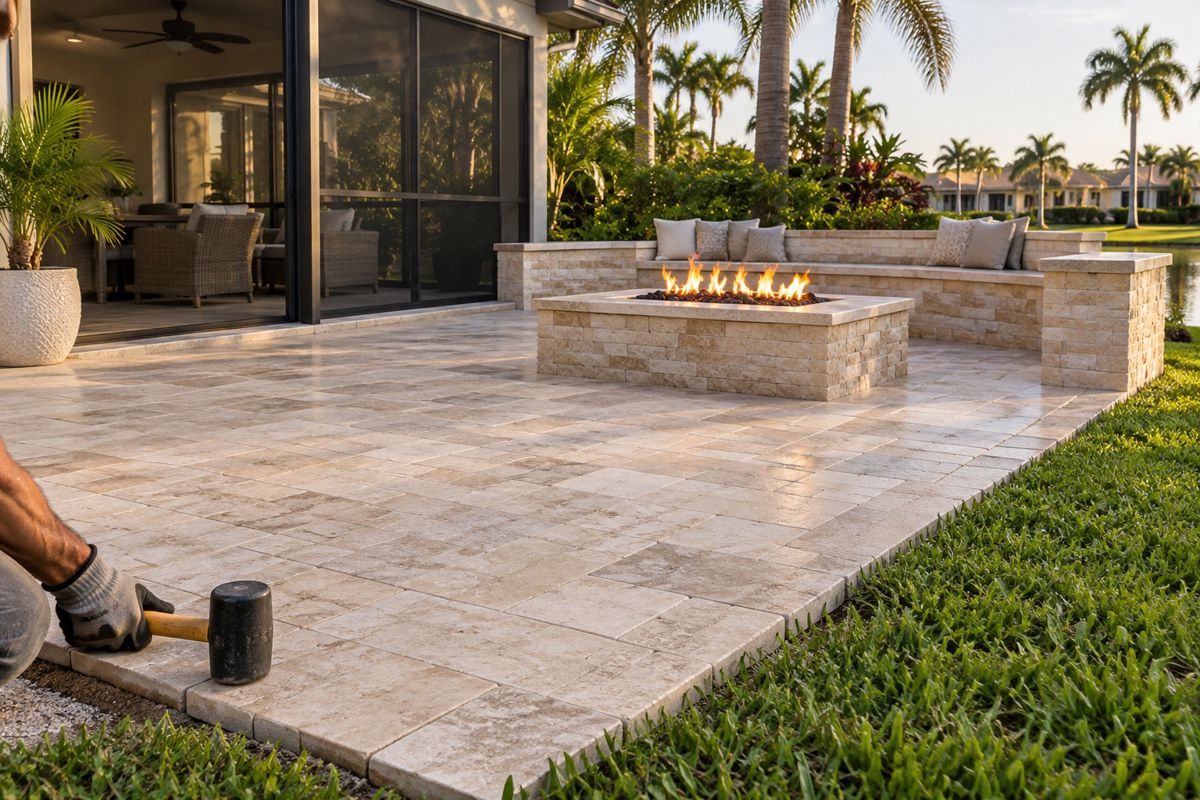
New paver patio with a fire pit and seating wall beside a Miami lanai

Pavers and patios in Miami

Hardscape contractor Miami homeowners can call for pavers

Patios, walkways, pool decks and fire pits built on a base made for Miami ground and rain.

  • Base work done to hold up in heavy rain
  • Light, cooler surface choices for sun
  • Slope planned so water runs off

Step 1 of 3

What do you need?

What does a hardscape contractor in Miami build?

Hardscape is everything in the yard that is not alive: patios, walkways, driveways, pool decks, steps, borders and fire pits. A hardscape contractor Miami homeowners hire should be able to take a rough idea, such as a shaded seating area off the back door, and turn it into a surface that drains, stays level and suits the house.

Common projects here include:

  • Paver patios and lanai extensions out into the yard
  • Pool deck resurfacing and new pool surrounds
  • Driveway and driveway apron upgrades
  • Front walkways and entry steps
  • Gas or wood fire pits and small seating walls

Pavers are popular in Miami because individual units can be lifted and reset if a pipe or root needs attention, which is harder with a poured slab. Hardscape also pairs well with a bigger plan, so see landscape design if you are rethinking the whole yard.

Why do pavers sink or shift on Miami ground?

Almost every failed paver job traces back to what is under the pavers, not the pavers themselves. Miami lots often sit on fill or thin sandy soil over limestone, and the summer rains are heavy. If the base is thin, poorly compacted or sits where water collects, the surface settles in a season or two.

A sound installation usually includes:

  • Excavating to the right depth and removing soft or organic material
  • A compacted base of crushed rock or limestone base material, built up in layers
  • A screeded bedding layer of sand, kept thin and even
  • Edge restraints, so the outer pavers cannot spread
  • Joint sand swept in and compacted, then topped up after the first rains

Slope matters as well. A patio should fall gently away from the house so storm water runs off the surface instead of toward the slab. Ask any contractor how they plan the base and the slope. A clear answer is a good sign.

Which paver materials hold up to Miami sun, rain and pool water?

Surface temperature is the first concern. Dark pavers in full Miami sun get hot enough to be uncomfortable barefoot, so lighter tones are common near pools and patios. Texture is the second concern, since a wet pool deck needs grip.

The usual options are:

  • Concrete pavers: wide range of shapes and colors, good value, easy to repair.
  • Travertine: a natural stone that stays cooler underfoot and is popular for pool decks.
  • Porcelain pavers: thin, durable and stain resistant, usually laid on a pedestal or a concrete base.
  • Natural coral stone: a local look with a pitted face, often used for steps and borders.

Salt air, chlorine and fertilizer can stain or etch some surfaces. A sealer can help with stains and color, but it needs to be reapplied from time to time. Ask what maintenance each material needs before you choose.

Price follows area, material and base work. A large patio in travertine over a deep base costs more than a small concrete paver walkway. Other drivers include demolition of an old slab, grade changes that call for a wall or steps, drainage added beneath the surface, lighting and gas lines for a fire pit, and how easily the crew can get materials to the work area.

Timing varies too. A walkway may take a few days. A patio with a fire pit and seating wall can take a week or two once materials are on site. Rain days, special-order stone and inspections can add to this.

We provide a written quote that lists the surface area, the material, the base depth and what is not included, so you can compare quotes that really match. Where water is a concern, our retaining wall and drainage work is often priced alongside.

What should you expect on the day, and when should you call?

On the first day the crew marks the layout, protects the house and any plants you want to keep, and starts excavation. Expect noise from the compactor and some dust. Materials arrive on pallets and are staged on the driveway or lawn. Work moves in a set order: base, bedding sand, pavers, cutting and edges, then joint sand and clean-up. Spare pavers are worth keeping for future repairs.

Before the job, check your HOA or condo rules. Many communities require approval for paver colors, driveway changes and anything visible from the street. Some jobs also need a permit, especially with gas lines, electrical work or structures, so ask the city or county building department what applies. Fire pits can be restricted by fire codes and HOA rules, and gas models are often easier to approve than wood-burning ones.

Call when pavers have sunk or tilted, when ants keep undermining a patio, or when you are planning a pool or addition. The home page shows the rest of what we do around Miami.

How it works

  1. Tell us about the yard

    Size, goals and any photos.

  2. Site visit and quote

    We walk the property and put the price in writing.

  3. We do the work

    Scheduled crew, cleanup included.

  • Free written quotes
  • Local crews
  • Reliable scheduling
  • Tidy job sites

Step 1 of 3

What do you need?

Questions about landscaping in Miami

Are pavers better than poured concrete in Miami?

Each has a place. Pavers flex a little, can be lifted and reset, and do not crack like a rigid slab when the ground shifts. Poured concrete costs less per square foot in many cases and gives a firm, flat surface. Pavers offer more choice of color and pattern and are easier to repair after plumbing or root work. The base underneath matters more than the surface in both cases.

Will pavers get too hot for bare feet?

Dark pavers in direct Miami sun can get very hot. Lighter colors and natural stone such as travertine stay noticeably cooler, which is why they are common around pools. Shade from a lanai, pergola or tree also helps. If bare feet matter to you, ask to touch a sample that has sat in the sun for an hour before you decide.

Do paver patios need a permit in Miami?

A simple ground-level patio often does not, but that depends on the city, the size and what is attached. Gas lines for a fire pit, electrical work, covered structures and large driveway changes commonly need permits, and some cities also review changes to the amount of paved surface on a lot. Check with your local building department, and with your HOA if you have one.

Why are weeds and ants a problem between pavers?

Joint sand holds a little soil and seeds over time, so weeds can sprout, and ants like loose sand for nests. Compacted polymeric joint sand, a clean base and a bit of maintenance reduce both problems. Sweeping off debris and topping up joints once a year helps keep the surface tight and level.

Can pavers be installed around an existing pool?

Yes, resurfacing a pool deck with pavers or stone is a common job. The crew has to protect the pool shell, set the right slope away from the water, and choose a surface with decent grip when wet. Deck drains, expansion joints and pool equipment can add steps, so a site visit is needed before anything is quoted.

Ready when you are. Call now or request a quote online.

Get my free landscaping quote