Skip to content
  • Free written quotes
  • Local crews
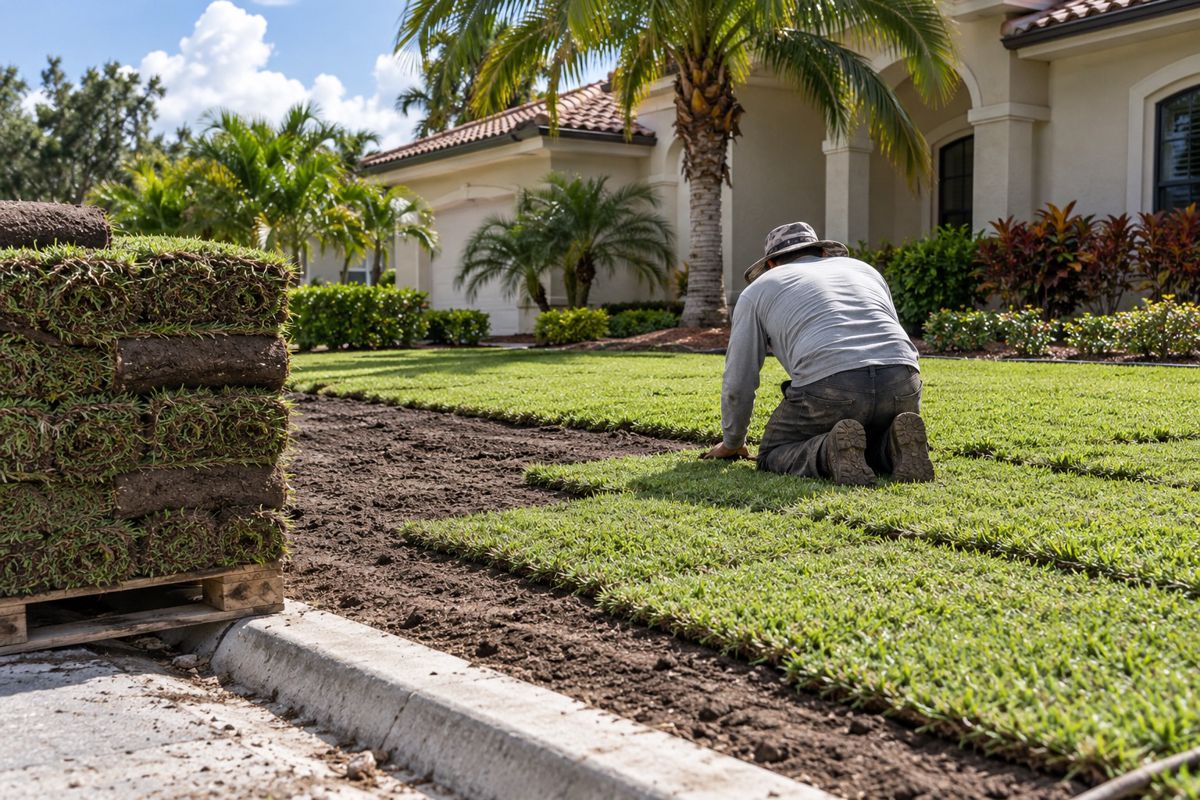
Crew laying fresh St. Augustine sod rolls on graded soil in Miami

Sod installation in Miami

Sod installation Miami lawns need, laid on prepared ground

Old turf removed, soil graded and new St. Augustine, Zoysia or other sod laid in a day or two.

  • Ground graded so water drains away
  • Grass matched to sun, salt and soil
  • Care steps explained before we leave

Step 1 of 3

What do you need?

What does sod installation in Miami involve?

Sod installation Miami homeowners ask about is more than rolling out grass. The job begins with removing the old lawn, weeds and debris, then grading the ground so water drains away from the house. In many yards the soil is thin, sandy and full of limestone fragments, so crews often add topsoil or compost, and remove rocks that would stop the sod from rooting.

Next the sod is laid in staggered rows, tight at the seams, trimmed around beds and pavers, and rolled to remove air pockets. Then the lawn gets a deep first watering. The whole idea is to bring the new roots into firm contact with the soil as quickly as possible.

Grass choice matters as much as the prep, and it is covered in the next section.

Which sod suits a Miami yard: St. Augustine or Zoysia?

St. Augustine is the usual pick. It is thick, takes heat and humidity, and copes with sandy soil. Floratam is a common variety for full sun, while others such as Seville and Palmetto are often chosen where shade is a factor. Zoysia is finer and denser and can look cleaner, but it grows more slowly and often costs more. Bahia is a plain, tough choice for large sunny areas, and seashore paspalum is known for salt tolerance on waterfront lots.

Match the grass to the site, not just the look. Count how many hours of direct sun the yard gets, check whether salt spray reaches the lawn, and think about pets, kids and parking. A shaded back corner is usually better served by groundcover or mulch than by turf.

Ask your installer what varieties are available this season, and where the sod was grown.

When is the right time to lay sod in Miami?

Sod can be laid almost all year in South Florida, because the ground does not freeze. Still, the season matters. Warm months give fast rooting, but summer heat and heavy rain can stress new sod and wash out poorly graded ground. Cooler, drier months from late fall to early spring are gentler on workers and on grass, though growth slows a little in winter.

Hurricane season, from June 1 to November 30, adds a wrinkle. If a storm is in the forecast, installers will often wait. Fresh sod that is pounded by wind-driven rain or covered in salt water takes longer to settle. Water restrictions also matter. New sod usually gets some leeway during an establishment period, but check the current rules for your address before you set the schedule.

If you plan a new sprinkler system, install it first. See sprinkler and irrigation systems for how that works.

The price depends on the total square footage, the type of sod, and how much prep the ground needs. Removing old turf, hauling away debris, regrading, adding soil, working around trees and fixing irrigation all add labor. Tight access, such as a narrow side gate, means more hand work. Delivery distance and pallet availability can also move the price.

Most residential sod jobs are laid in one to two days once the ground is ready. A full overhaul with grading and soil work can run longer. The lawn itself needs a few weeks before it is firmly rooted, and several months to look fully filled in.

You get a written quote with the area, the grass type and the prep work listed. Compare quotes on those details, not just the total. For bigger changes to the yard, see landscape design.

What should you expect on the day, and when should you call?

Sod is delivered on pallets, often early in the day, and installed the same day so it does not sit and heat up. Expect the crew to work quickly, with a truck or pallet jack on the driveway and some noise from trimming and rolling. When the work is done, the lawn looks green but a little patchy at the seams. That is normal.

After installation, keep foot traffic off for the first couple of weeks. Water as the installer or grower directs, within current local rules, and hold off on mowing until the sod is rooted. Wait on heavy feeding until the roots are established, and note that Miami-Dade has fertilizer rules, including limits during the summer rainy season.

Call when your lawn has large dead patches, thinning from shade, yellowing that does not clear with water, or chinch bug damage that has spread. If standing water is killing the grass, see retaining walls and drainage. The home page lists our other services.

How it works

  1. Tell us about the yard

    Size, goals and any photos.

  2. Site visit and quote

    We walk the property and put the price in writing.

  3. We do the work

    Scheduled crew, cleanup included.

What you can expect

  • Free written quotes

  • Local crews

  • Reliable scheduling

  • Tidy job sites

Step 1 of 3

What do you need?

Questions about landscaping in Miami

How long before I can walk on new sod?

Light foot traffic for watering or checking seams is fine early on, but avoid play, pets and heavy use for the first couple of weeks while roots form. A common test is gently tugging a corner. If it lifts easily, the roots have not taken hold yet. Wait until it resists before mowing or letting the family use the lawn.

Why is my St. Augustine lawn turning yellow?

Common causes in Miami include chinch bugs in hot, sunny spots, iron shortage on alkaline soil, too much or too little water, and fungal disease after long wet spells. Look closely at the edge between green and yellow grass. Pests are often visible there. A local nursery or extension office can help identify the cause before you spend money on products.

Can sod be laid over my old lawn?

It is usually not a good idea. Old turf and weeds block roots from reaching soil, hold moisture unevenly and leave humps under the new sod. Removing the old lawn and grading properly gives better results. Where the ground is already level and weed-free, a thin overseed or patch repair may be enough instead of a full replacement.

How much water does new sod need?

New sod needs steady moisture while roots establish, usually with frequent light watering at first and then less often. The exact amount depends on sun, soil and weather, and Miami watering rules apply, though new plantings often get a short establishment allowance. Check the current schedule for your address and follow the grower's advice for your variety.

Is Zoysia worth the extra cost in Miami?

It can be, in the right place. Zoysia gives a fine, dense look, handles some shade and takes moderate traffic. It also grows slowly and costs more up front. For a showpiece front lawn it often pleases owners. For a large, busy back yard, St. Augustine is more common because it fills in faster and costs less.

Ready when you are. Call now or request a quote online.

Get my free landscaping quote