
Skip to content
  • Free written quotes
  • Local crews
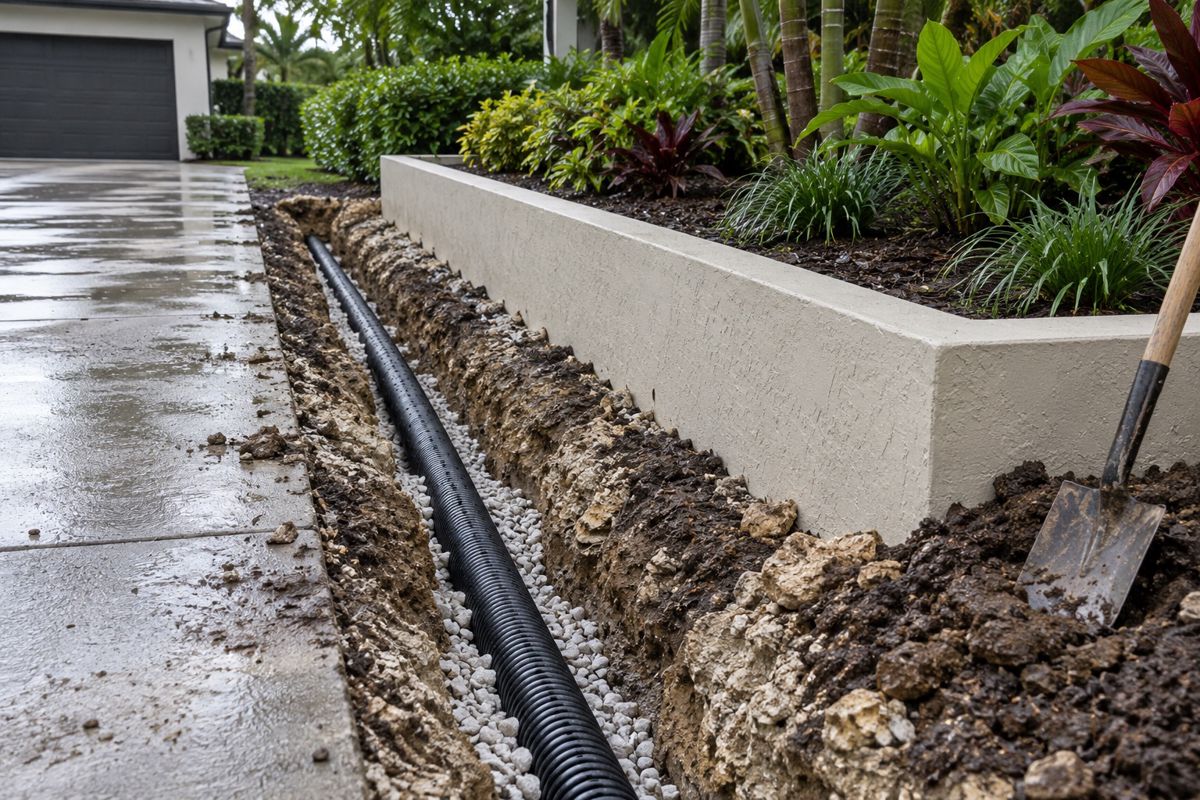
Low block retaining wall and drainage trench beside a Miami driveway

Walls and drainage in Miami

Retaining wall contractor Miami yards need for water and grade

Low walls, raised beds, swales and drains that move water off your lot and keep soil in place.

  • Walls built with drainage behind them
  • Fixes for pooling water and wet slabs
  • Materials chosen for humidity and termites

Does a flat city like Miami need retaining walls?

Miami is flat, so tall retaining walls are rare. What homeowners here usually need are low walls that hold soil in place for a reason. Examples include raised planting beds, a built-up front yard that sits above the street, a step between two lots, a terraced pool area, and soil held back next to a driveway or a seawall. Many newer homes are built up on fill to meet flood elevation rules, and that new grade often needs a wall to finish cleanly.

A retaining wall contractor Miami owners trust should talk about what the wall is holding, what is behind it, and where the water goes. A wall that blocks water without a way out will lean, crack or fail. Good walls include drainage stone, a way for water to leave and a solid base.

Which wall materials work in a humid, termite-prone climate?

Miami's humidity, rain, salt air and termites rule out some common choices. Untreated or lightly treated timber is a poor fit, because wood in contact with soil rots and attracts termites. More durable options include:

  • Concrete block with stucco or a veneer: strong and familiar, often matched to the house.
  • Poured concrete: very strong, used where loads are higher.
  • Segmental block: dry-stacked units for planters and low walls, quick to build.
  • Natural stone: a good look, but cost and labor are higher.

Steel reinforcement should be protected from salt exposure near the water, so ask how the contractor handles it. Look at the finish too. A wall in a front yard is part of how the house looks from the street, and many HOAs ask for approval on color and height. If you are also reworking hard surfaces, see hardscaping and pavers.

How do you fix standing water and drainage problems in Miami?

Miami soil drains fast in many places, yet yards still flood. The water table is high, in some areas only a few feet below the surface, so after a long rain the ground has nowhere to take more. Low lots, compacted fill and paved areas add to the problem, and in some coastal neighborhoods tidal flooding can push water into streets and yards during high tides.

Common fixes include:

  • Regrading so water runs away from the house
  • Swales, which are shallow, planted channels that carry water
  • French drains, which collect water in a buried perforated pipe
  • Catch basins and dry wells that let water soak down
  • Downspout extensions that move roof water away from the foundation

The right fix depends on where the water starts and where it can legally go. You generally cannot send runoff onto a neighbor's lot, so a site visit is needed.

Drainage and walls vary a lot. The things that move the price include the length and height of the wall, the material, how much digging is needed, whether the pipe has to cross a driveway or patio, and whether the water can drain to a safe place on your own lot. Rock and limestone close to the surface can slow digging. Access for equipment, tree roots and buried utilities all affect the time.

A short planter wall may take a few days. A longer wall with drainage and regrading can take a week or more. Heavy rain slows excavation and can fill trenches overnight, so wet season jobs often need padding in the schedule.

Walls over a certain height, and walls near property lines, seawalls or easements, can need permits and engineered drawings. The height limit and the rules differ by city and county, so ask your building department early. The written quote lists what is and is not covered.

What should you expect on the day, and when should you call?

Before digging, utilities should be located and marked. Florida has a free service, Sunshine 811, that handles this, and any serious contractor will use it. The crew then excavates, sets a compacted base, builds the wall in courses, places drainage stone and fabric behind it, and backfills in layers. Soil and debris are hauled away or reused on site. Finished grade is shaped to carry water away.

Call when water pools near the foundation, when stucco shows staining or cracks near ground level, when a planter or wall leans or bulges, or when a pool deck or patio floods. Do not wait for hurricane season to find out how your drainage performs. A new landscape design can also account for drainage from the start, and restoring a lawn afterward is covered under sod installation. See the home page for other services.

How it works

  1. Tell us about the yard

    Size, goals and any photos.

  2. Site visit and quote

    We walk the property and put the price in writing.

  3. We do the work

    Scheduled crew, cleanup included.

  • Free written quotes
  • Local crews
  • Reliable scheduling
  • Tidy job sites

Step 1 of 3

What do you need?

Questions about landscaping in Miami

Why does my Miami yard flood when the soil drains fast?

Fast draining soil only helps when there is somewhere for water to go. In Miami the water table can sit a few feet down, so long rains fill the space under your yard. Low spots, compacted fill, roofs and paved areas push even more water onto the lawn. A drain or swale gives the water a path out instead of leaving it to pool.

Do I need a permit for a retaining wall?

Low garden walls often do not need one, but taller walls, walls that carry a load, and walls near property lines, easements or seawalls commonly do. Height thresholds and review rules vary by city and county. Ask your building department before work starts, and ask your HOA about approval for visible walls. A clear sketch of height, length and material speeds up both.

What is the difference between a French drain and a swale?

A swale is a shallow, planted channel on the surface that carries water along a gentle slope. A French drain is a buried perforated pipe in a gravel trench that collects water below the surface and moves it elsewhere. Swales suit open lawns with room and gentle slopes. French drains suit tight areas, along walls and next to patios.

Can wood timber walls work in Miami?

They are a weak choice. Wood in contact with wet soil rots in humid climates, and termites are a real threat in South Florida. Concrete block, poured concrete, segmental block and natural stone last longer. If you like the look of timber, a masonry wall with a veneer or a raised bed made of block can give a similar feel without the upkeep.

Will a new wall change where water goes on my lot?

It can. A wall that holds soil up also holds water back unless it has drainage behind it. The plan should show where water flows before and after, and should not push runoff onto a neighbor. Good design adds drain stone and an outlet, and sometimes a swale or catch basin so the water has a clear way out.

Ready when you are

Call now or request a quote online.

(305) 555-0124

Get my free landscaping quote