
Skip to content
  • Free written quotes
  • Local crews
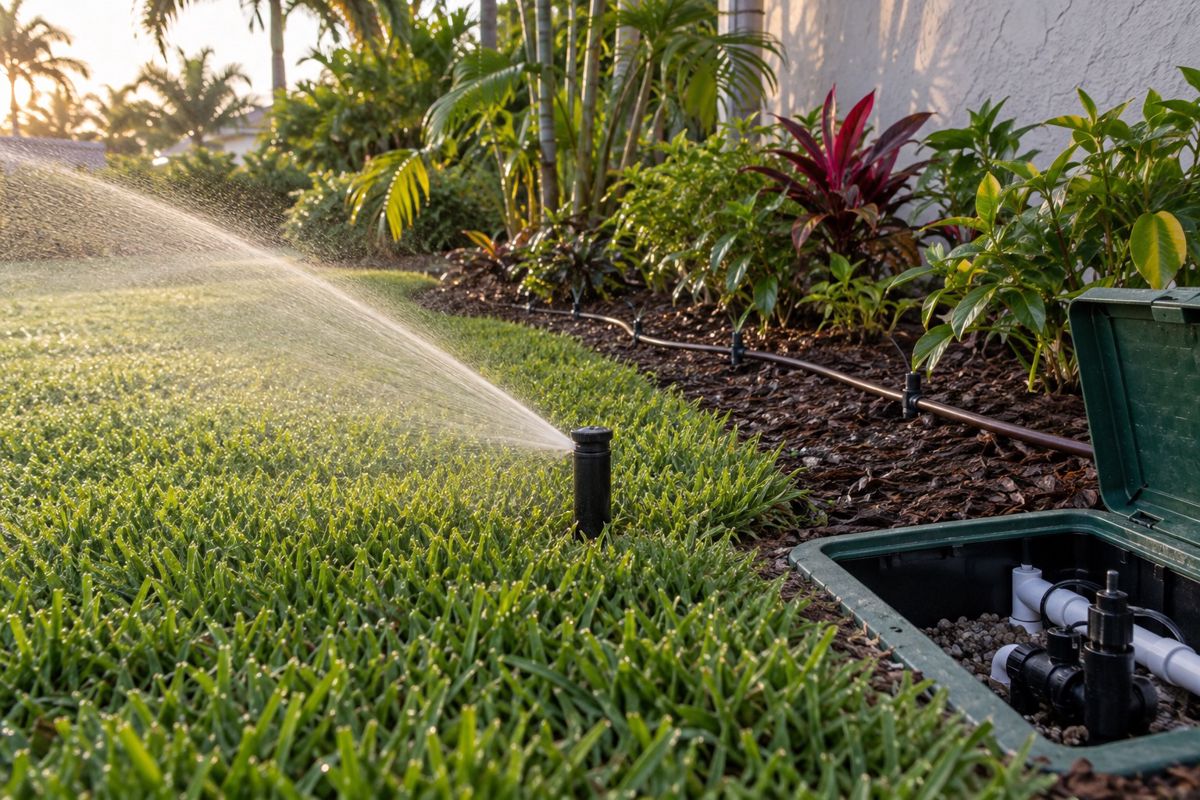
Sprinkler head watering a Miami lawn beside an open irrigation valve box

Sprinklers and irrigation in Miami

Sprinkler system installation Miami lawns and beds can rely on

Zoned systems with the right heads, a rain sensor and a controller you can adjust when watering rules change.

  • Separate zones for lawn and beds
  • Rain sensor and backflow protection
  • Parts chosen for sun and salt air

What goes into a sprinkler system installation in Miami?

A sprinkler system installation Miami homeowners can depend on begins with a map of the property. Lawn, shrub beds, trees and pots all need different amounts of water, so the system is split into zones. Each zone gets the type of head that suits it: rotors or spray heads for turf, and drip or micro-spray for beds. Pipe is laid in trenches, valves go into a box, and a controller sets days and run times.

Other pieces include a backflow preventer to keep irrigation water out of the drinking supply, a rain sensor, and a connection to your water source. Some Miami homes water from a shallow well or a pump rather than city water, and that changes pressure and equipment choices. A well can also bring iron that stains walls and pavers, which is worth discussing up front.

What are the Miami watering rules?

South Florida has watering limits set by the South Florida Water Management District and enforced locally. In Miami-Dade, landscape watering is generally limited to certain days of the week based on your street address, and it is not allowed during the middle of the day. Reclaimed water, wells and some commercial sites can follow different rules, and new plantings often get a short establishment period with extra watering.

Because the rules and local ordinances change, check the current schedule for your address before you set the controller. Your water utility or the water management district can confirm it.

Florida law also expects automatic systems to have a working rain sensor, which shuts the system down when it has rained. A system that runs during a storm wastes money and may draw a warning or fine. A good installer programs the controller to follow the schedule, and shows you how to change it when the rules change.

Which sprinkler parts hold up to salt air and hard use?

Miami's heat, sun and salt air are hard on irrigation parts. UV breaks down cheap plastic, mowers hit heads, and near the water salt speeds up corrosion on exposed metal. Quality parts and sensible placement help systems last longer.

  • Choose UV-resistant heads and rust-proof or plastic fittings near the coast.
  • Match head types on a single zone so every area gets the same water.
  • Use drip for beds and trees, where spray wastes water on leaves and mulch.
  • Consider a smart controller that adjusts run times to weather and works with your rain sensor.
  • Keep heads clear of walls so spray does not stain stucco, especially when watering from a well.

For new lawns, the irrigation layout should be settled before the grass goes in. If you are doing both, plan the system together with the sod installation so trenches do not tear up fresh turf.

The main cost drivers are the size of the area, the number of zones, the type of heads, trenching conditions, and the controller you pick. Limestone close to the surface is harder to trench. Old systems that need partial replacement cost differently from a brand new system, and extra work such as a new connection, a pump or a backflow device adds to the total.

A small yard may be done in a day or two. A large property with many zones can take several days. Rain, access and permit steps can add to this. Some cities require a permit or inspection for new irrigation or backflow devices, so ask your local building department. If your lawn is being replaced, the pipe should go in first.

The written quote shows the number of zones, the head types and the controller, so you know what you are paying for. It also helps to ask who handles future repairs and seasonal start-up.

What should you expect on the day, and when should you call?

Crews begin by marking the pipe runs and heads, then call for utility locates and dig trenches or pull pipe. Expect some disturbed ground along the pipe path, and some mess in the lawn. Valves are installed and the pipe is flushed and pressure tested before heads go on. The controller is set, each zone is run, and the heads are adjusted to avoid the house, the road and the fence. You should be shown how to change the schedule and how to turn the water off.

Call when you see dry or brown patches next to green ones, soggy spots, a high water bill, heads that spray the wall, or a system that still runs in the rain. Leaks often hide underground and waste water long before anyone sees them. If your yard is getting a new layout, landscape design and watering should be planned together. The home page covers the other work we do in Miami.

How it works

  1. Tell us about the yard

    Size, goals and any photos.

  2. Site visit and quote

    We walk the property and put the price in writing.

  3. We do the work

    Scheduled crew, cleanup included.

  • Free written quotes
  • Local crews
  • Reliable scheduling
  • Tidy job sites

Step 1 of 3

What do you need?

Questions about landscaping in Miami

How often can I water my lawn in Miami?

Watering is generally limited to certain days each week based on your address, and not during the middle of the day. The details come from the South Florida Water Management District and your local government, and they can change. Check the current schedule for your address with your water utility, then set the controller to match.

Do I need a rain sensor?

Yes. Florida law expects automatic irrigation systems to have a working rain shut-off device. It saves water and money by stopping the system after rain. The sensors need an occasional check, since sun, dust and insects can stop them working. If your older system lacks one, adding a sensor is a small and sensible upgrade.

Why is my sprinkler water staining my walls?

Well water often carries iron, which leaves rust-colored stains on stucco, pavers and driveways. Spray hitting walls makes it worse. Options include adjusting or replacing heads so they do not reach the wall, switching nearby beds to drip, and talking with a water treatment company about the iron. Fixing the spray pattern is the cheapest first step.

Is drip irrigation worth it for Miami beds?

Often yes. Drip puts water at the roots instead of spraying leaves and mulch, so less is lost to evaporation and wind. It suits shrub beds, hedges and trees. It needs filters and an occasional check for clogs or chewed lines. Lawns still do better with rotors or spray heads on their own zone.

How do I know if my system is leaking?

Look for soggy ground, bright green patches, low pressure, heads that stay wet after the zone stops, or a water bill that jumps without a reason. Run each zone and watch the heads. A broken head is easy to spot. A buried pipe leak usually needs a technician to trace it. Early repairs usually cost less than months of wasted water.

Ready when you are

Call now or request a quote online.

(305) 555-0124

Get my free landscaping quote