Skip to content
  • Free written quotes
  • Local crews
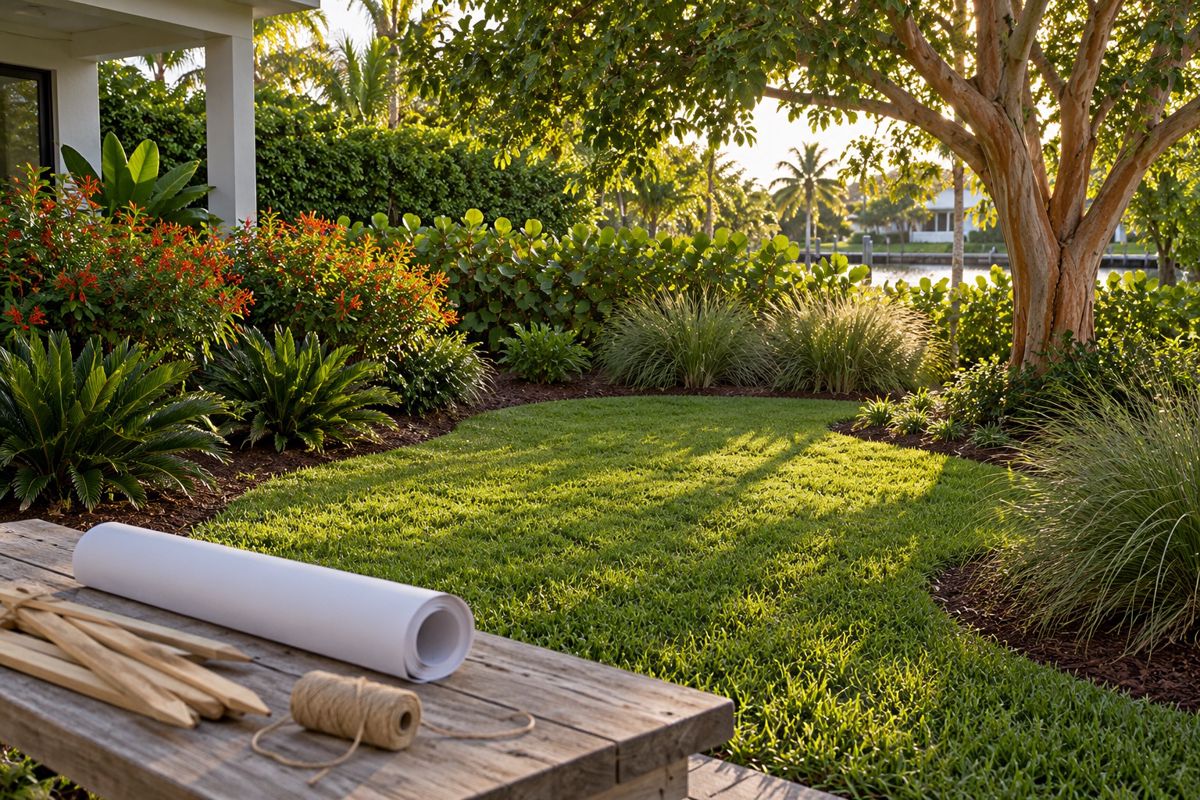
Newly planted tropical backyard beds with a rolled landscape plan on a bench

Landscape design in Miami

Landscape design Miami yards can live with all year

Layouts, planting plans and full yard overhauls that suit Miami soil, sun and storms.

  • Plan on paper before work starts
  • Plants chosen for limestone and salt air
  • Phased work if you prefer

Step 1 of 3

What do you need?

What does landscape design in Miami involve?

Landscape design Miami homeowners can rely on starts with a walk around the property, not a catalog of plants. We look at where the sun hits, where water sits after a summer storm, and how the yard connects to the house, the driveway and the street. From there we sketch a layout that covers beds, lawn, trees, paths and any patio or pool surround.

A complete yard overhaul can include removing old or invasive plants, regrading low spots, new beds with fresh soil, new trees and palms, lawn, lighting, irrigation and hard surfaces. Some owners want the whole yard done. Others want the front only, or one problem corner fixed. Both are fine, and the plan can be built in phases.

Ask to see the plan on paper before work starts, so you know what goes where and what is left for a later phase.

Which plants work in Miami limestone and salt air?

Most of Miami sits on shallow limestone with a thin layer of sandy soil on top. That soil drains fast, holds little organic matter and tends to be alkaline. Plants that want rich, acidic soil often turn yellow and struggle. A good Miami plan picks plants that cope with these conditions, or builds up the planting beds so they can.

Native and Florida-friendly choices often do well:

  • Coontie, a tough native cycad that handles shade and heat
  • Firebush and Simpson's stopper for flowers, fruit and wildlife
  • Sea grape, cocoplum and buttonwood for salt tolerant hedges near the water
  • Muhly grass and fakahatchee grass for texture
  • Sabal palm and gumbo limbo for shade and structure

Near Biscayne Bay and the coast, salt spray burns tender leaves, so tolerance matters more there than it does a few miles inland.

What changes the price of a yard overhaul?

Every yard is different, so we do not quote by phone from a guess. The main things that move the price are the size of the area, how much old material has to be removed, and how much soil or fill must be brought in. Large trees, mature palms and specimen plants cost more than small container plants. Hard surfaces such as paver patios and walkways add labor and material, and a new irrigation system adds to the total as well.

Access matters too. A narrow side yard where everything must be carried by hand takes longer than an open lot. Phasing the project can spread the cost over more than one season.

You get a written quote that lists what is included, so you can compare it line by line with any other quote you receive.

Timing depends on scope. A single front bed and a few trees may be done in a few days. A full yard overhaul with new grading, a patio, planting and sod can run a few weeks. Design work comes first, and approvals, material lead times and weather can add time.

South Florida weather plays a real part. In the wet season, from roughly June through October, afternoon storms can pause digging and planting. Many owners plan big planting work for the fall and winter dry months, when the heat is gentler and new plants settle in with less stress. Hurricane season runs from June 1 to November 30, and a named storm in the forecast can shift a schedule by days.

We will talk through a realistic order of work with you before anything starts, including what has to happen first.

What should you expect on the day, and when should you call?

On a work day, the crew marks out beds, stages plants and materials, and protects driveways and walkways. Plants are set at the right depth, mulched and watered in. Debris is hauled off, and the area is left tidy. If you have an HOA, check its rules on plant lists, front yard changes and tree removal before work begins. Some communities ask for approval, and a clear plan helps with that submission.

Call when a yard floods after rain, when plants keep dying in the same spot, when a hedge or palm has outgrown its place, or before you buy a house with a neglected yard. Starting with a plan costs less than fixing guesses later. If you also need a new lawn, see our sod installation page, or head back to the home page to see everything we do in Miami.

How it works

  1. Tell us about the yard

    Size, goals and any photos.

  2. Site visit and quote

    We walk the property and put the price in writing.

  3. We do the work

    Scheduled crew, cleanup included.

What you can expect

  • Free written quotes

  • Local crews

  • Reliable scheduling

  • Tidy job sites

Step 1 of 3

What do you need?

Questions about landscaping in Miami

Do I need a landscape plan for a small yard?

Not always a formal drawing, but a simple plan still saves money. Even a small yard benefits from knowing where beds, paths and trees go, and where the water runs. A rough sketch with plant choices and spacing is enough for many jobs. Larger projects, HOA submissions and phased work are easier with a clear plan on paper.

Which plants handle Miami hurricane season best?

Native and well-rooted plants tend to cope better than weak, overgrown or poorly planted ones. Sabal palms, live oaks and many native shrubs are known for wind resistance, while large trees with shallow roots or heavy, crowded canopies are riskier. Proper planting depth, staking young trees and sensible pruning all help. No plant is storm-proof, so spacing trees away from the house matters.

Can you design a yard that uses less water?

Yes, that is a common goal here. Group plants by water need, choose Florida-friendly and native species, use mulch to keep roots cooler, and put drip or micro-spray on beds instead of spraying everything. Smaller lawn areas cut water use too. Watering is also limited by local rules, so a plan that needs less water is easier to live with.

Do native plants really matter in Miami?

They often help. Natives such as coontie, firebush and buttonwood have adapted to local soil, heat and salt, so many need less fertilizer and water once established. They also support birds and butterflies. Native does not mean maintenance free, and some non-native tropical plants do very well here, so the plan can mix both.

Should I remove invasive plants before I redesign?

It is usually smart. Plants such as Brazilian pepper and Australian pine spread aggressively and crowd out better choices. Removing them before planting stops them from returning through the new beds. Some trees need a permit to remove, so check with your city or county first, especially for larger or protected specimens.

Ready when you are

Call now or request a quote online.

(305) 555-0124

Get my free landscaping quote